Hazard assessment
Job role, exposure, lens, and head protection interface notes.
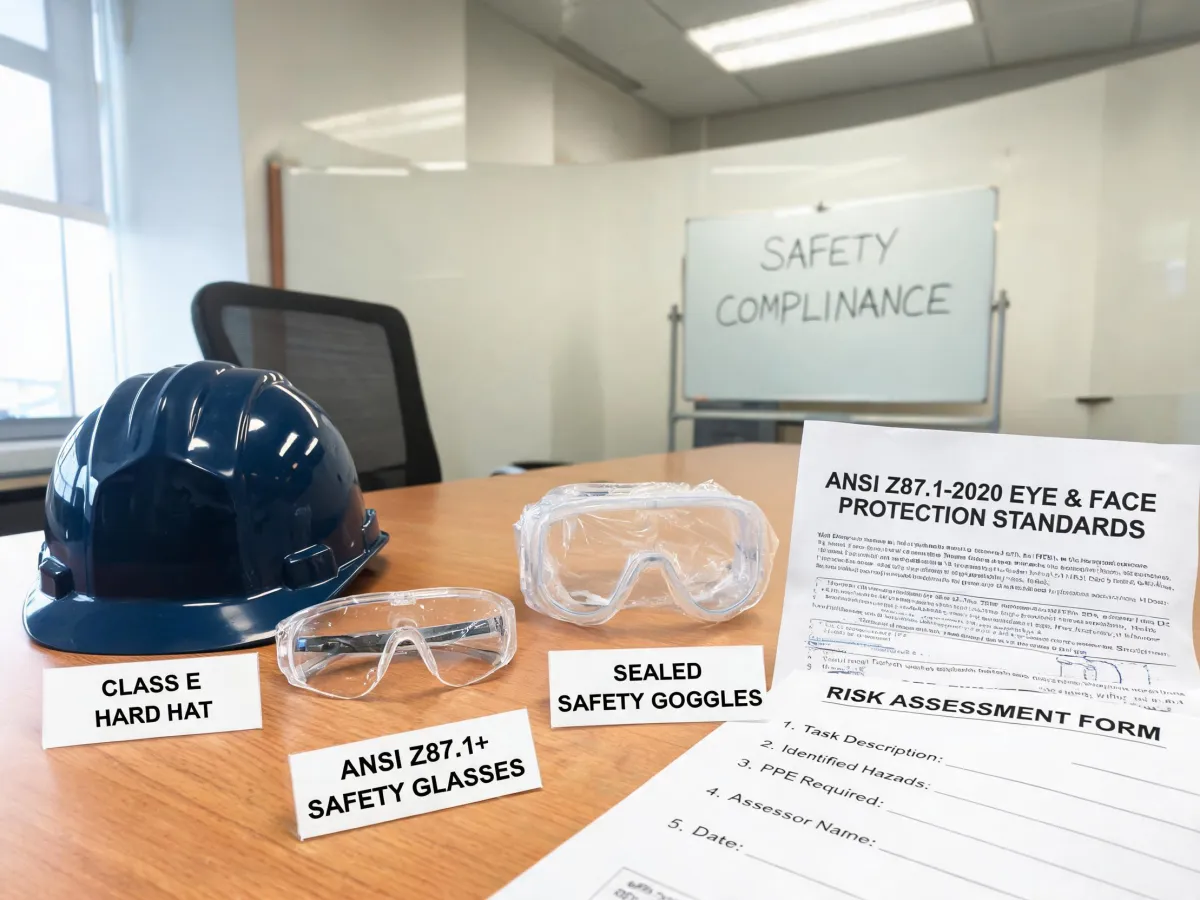
The program begins by separating product standards from workplace compliance obligations. OSHA does not approve PPE products; it defines employer responsibilities in the workplace. ANSI and EN references help describe product performance and marking. Edge Eyewear keeps those terms distinct so purchasing copy, training notes, and distributor quotations do not drift into inaccurate approval language.
| Standard | Jurisdiction | Scope | Renewal cadence | Sample deliverable |
|---|---|---|---|---|
| ANSI Z87.1-2020 | United States | Eye and face protection marking and impact criteria | Annual product list review | Eyewear selection matrix |
| ANSI Z89.1-2014 | United States | Industrial head protection Type I / II and Class E / G / C | Annual site review | Hard hat interface note |
| EN 166 | European Union | Personal eye protection optical and mechanical requirements | Supplier declaration review | EN reference summary |
| EN 397 | European Union | Industrial safety helmets | Model or supplier change | Helmet compatibility checklist |
| CSA Z94 series | Canada | Eye, face, and head protection context | Regional program review | Canada site addendum |
Compliance work becomes easier when each site can find the same type of record in the same place. Edge Eyewear structures deliverables as practical templates rather than decorative certificates. Buyers can maintain hazard assessments, gap reviews, task risk analyses, product datasheets, training logs, and incident review notes alongside the approved eyewear matrix. The goal is not to promise an outcome; it is to reduce ambiguity when teams explain why a product was selected, when it should be replaced, and which alternate is acceptable.
Job role, exposure, lens, and head protection interface notes.
Current issue list compared with task needs and standards references.
Step-by-step controls for fabrication, outdoor, visitor, and maintenance work.
Product copy, markings, lens notes, and declared references in one file.
Supervisor sign-off template for issue, care, and replacement guidance.
Neutral form for corrective actions without assigning product claims.
Confirm particle, splash, dust, glare, and head impact conditions by job role.
Attach ANSI Z87.1-2020, EN 166, ANSI Z89.1-2014, or EN 397 where relevant.
Capture feedback on fogging, fit, hard hat contact, storage, and cleaning.
Publish primary and backup items so distributor substitutions remain intentional.
Many eyewear programs fail quietly when knowledge lives with one supervisor. Edge Eyewear templates turn that knowledge into short, maintainable records: who wears what, why it was chosen, how alternates are approved, when lens tint changes by environment, and where product references are stored. The templates also flag language that should be avoided, such as product-approval wording or absolute risk-removal claims. This keeps the program useful for audits, onboarding, purchasing, and distributor support.
The compliance calendar gives teams a rhythm. Annual reviews check the approved matrix against current tasks. Quarterly distributor stock checks confirm that primary and alternate eyewear remain available. Triggered updates occur when work changes, a product is discontinued, a standards reference is revised, or field feedback shows comfort and fogging problems. The cadence keeps the program current without turning daily PPE issue into a paperwork project.
Distributor stock review and alternate availability check.
Approved list, hazard profile, and documentation refresh.
Task change, product change, supplier update, or recurring feedback issue.
Share your region, worksite type, and current eyewear list. Edge Eyewear will help outline a documentation path that keeps standards references and workplace responsibilities distinct.